Internal Linking Strategy: From Chaos to System
Pages with 40-44 internal links get 4x more organic traffic (Zyppy, 23M links studied). Build a repeatable linking system for crawl depth and authority.
TL;DR: Pages with 40-44 internal links get 4x more organic traffic (Zyppy, 23M links, 1,800 sites). Build a repeatable linking system by mapping your site structure, eliminating orphan pages, and linking by search intent.
At a Glance: Internal Linking Drives Measurable SEO Gains
Pages with 40-44 internal links receive four times more organic traffic than poorly linked pages (Zyppy, 2024, 23 million links across 1,800 websites). Orphan pages consume 26% of crawl budget on average (Botify), and optimizing internal link structures has improved crawl rates from 40% to 70% in documented case studies (JetOctopus). These numbers confirm that internal linking is not a secondary tactic. It is the structural foundation that determines how efficiently search engines discover, understand, and rank your content.
About the Author
Benjamin Samar is Co-Founder and Technical Director at Rankenstein, where he leads SEO content architecture for B2B SaaS clients. He has managed over 100 site migrations and audited 15,000+ SERPs across US, EU, and APAC markets since 2019.
Why Does Internal Linking Matter for SEO?
Zyppy's study of 23 million internal links across 1,800 websites found that pages receiving 40-44 internal links get 4x more organic traffic than those with fewer than five (Zyppy, 2024). Traffic declines after approximately 44 links, establishing a practical upper boundary for link volume per page.

Internal links serve three core functions. They distribute PageRank from high-authority pages to newer content. They provide semantic context through anchor text, telling search engines what each linked page is about. And they create crawl paths that determine which pages get discovered and indexed.
Without a deliberate linking strategy, authority pools on a handful of pages while the rest remain invisible. Google's crawlers follow links to discover content. Pages without incoming internal links become orphans that search engines may never find, regardless of content quality.
The distinction between strategic and random linking is measurable. Authority Hacker analyzed 1 million internal links from 10,000 first-page results and found that pages with high anchor text diversity averaged position 1.3, compared to position 3.5 for pages with low diversity. Raw link quantity alone showed no correlation with rankings. Quality, relevance, and varied anchor text matter far more than volume.
How Do Internal Links Improve SEO Rankings?
Optimized link distribution increases the indexing rate of deep-tier content by up to 60% (IJARSE Research Paper). Google Search Central confirms that internal links help search engines "discover content on your site" and recommends using "descriptive text that provides context for the linked page" (Google Search Central).
The ranking mechanism works through three channels. First, internal links transfer PageRank from strong pages to weaker ones. Second, anchor text signals topic relevance to search engines. Third, link proximity within topical clusters reinforces subject authority.
Authority Hacker's study of 10,000 first-page results revealed that topically-proximate internal links correlate strongly with high rankings. Combined with strong E-E-A-T signals, this topical proximity creates a compounding authority effect. Pages linked from other pages within the same site section consistently outperform those linked from unrelated sections. This validates the pillar-cluster model where hub pages link to closely related subtopic pages.

The practical takeaway: focus on creating varied, descriptive anchor text and linking between topically related pages. Adding more links without strategic intent provides no ranking benefit.
What Is Site Mapping and Why Should It Precede Linking?
Semrush found that 69% of over 50,000 analyzed domains contain at least one orphan page, a page with zero internal links pointing to it. Botify research shows these orphan pages consume 26% of crawl budget on average, with extreme cases reaching 70%.

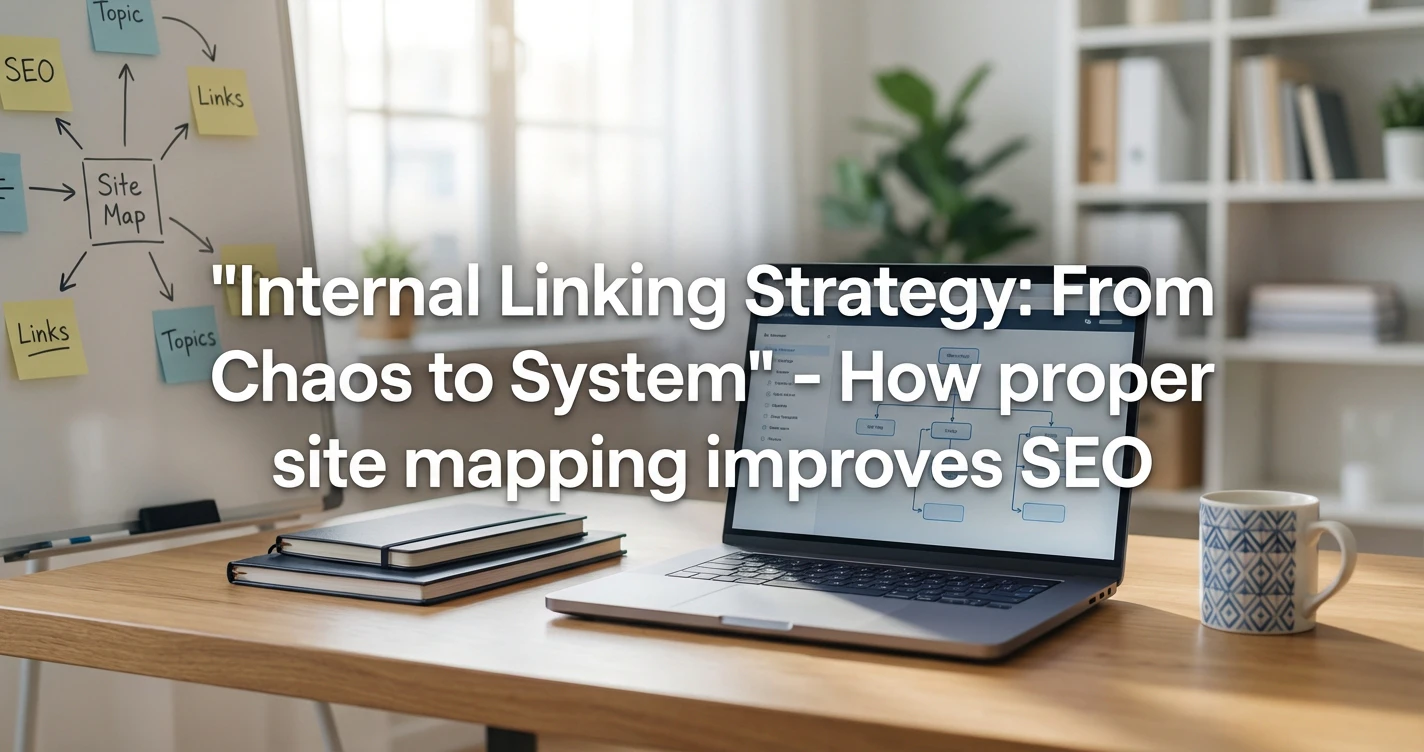
Site mapping creates a visual blueprint of your website's information architecture before any linking begins. This foundational step identifies content gaps, orphan pages, and structural weaknesses that would otherwise go unnoticed.
The process works in three stages. First, crawl the existing site to inventory all URLs and their current link relationships. Second, map each URL into a topical cluster using a hub-and-spoke model where central authority pages connect to detailed subtopic articles. Third, identify which pages need links added, which need links removed, and where new content fills topical gaps.
An XML sitemap helps search engines discover URLs, but it does not replace internal links. Sitemaps are a discovery mechanism. Internal links provide the authority signals and semantic context that determine how pages rank.
How Do You Map Internal Links Step by Step?
Google Search Central recommends that links use "descriptive text that provides context for the linked page" rather than generic anchors like "click here" or "read more" (Google). This principle should guide every internal link you create.
Follow this four-step mapping process:
- Identify power pages: Use Google Search Console to find pages with high impressions and existing backlinks. These are your authority sources for distributing link equity.
- Cluster by intent: Group URLs by topic rather than URL slug. A page about "SEO auditing tools" belongs in the same cluster as "how to run a technical SEO audit," even if they sit in different directories.
- Define anchor text standards: Create a library of 3-5 approved anchor text variations per target page. Zyppy found that anchor text variety correlates directly with traffic, the more varied the anchor text pointing to a page, the higher its organic traffic (Zyppy, 2024).
- Establish link flow: Map each new article to link to its parent hub and at least two related spoke pages. Keep every important page within three clicks of the homepage.
Automate what you can. Forty percent of SEOs now use tools or scripts for internal linking, and those who combine link metrics with indexation and traffic data report 38% higher link ROI.
Which Website Architecture Works Best for SEO?
Optimizing internal link structures improved crawl rates from 40% to 70% in a JetOctopus case study on large websites. The gains came from reorganizing internal structure, not building new external links.
| Architecture Type | Best For | SEO Benefit | Complexity |
|---|---|---|---|
| Flat Structure | Small Blogs | Fast Discovery | Low |
| Topic Silos | E-commerce / Niche Sites | Authority Building | Medium |
| Hub & Spoke | Content-Heavy Sites | Maximum Crawl Efficiency | High |
| Hybrid System | Enterprise / Agencies | Scalable Rankings | Very High |
Topic silos group related content into distinct sections, reinforcing topical authority and preventing keyword cannibalization. Link equity stays within each topic area, signaling depth of expertise to search engines. Cross-silo links between related topics in different silos can bridge semantic gaps when used selectively.
The hub-and-spoke model works best for content-heavy sites. A central pillar page covers a broad topic and links to detailed subtopic pages. Each spoke links back to the hub and to 2-3 related spokes. This creates a tight cluster that search engines can crawl efficiently.

How Do You Audit Internal Links for Content Optimization?
Orphan pages waste 26% of crawl budget on average, and 69% of large websites have them (Botify, Semrush). An internal linking audit identifies these orphans, plus broken links and missed opportunities to funnel equity to underperforming content.
Start your audit with these steps:
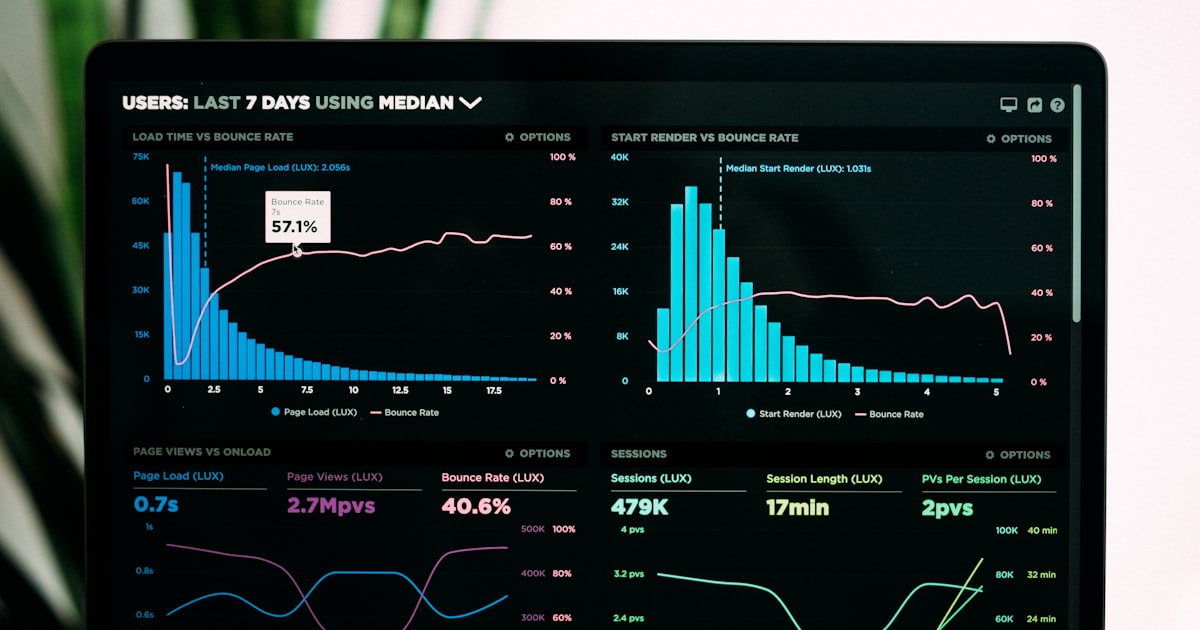
- Crawl the site with Screaming Frog or Sitebulb to generate a complete link graph showing every internal link relationship.
- Identify orphan pages, any URL with zero incoming internal links. These pages are invisible to crawlers navigating through links.
- Fix generic anchors, replace "click here" and "read more" with descriptive text. Google Search Central recommends concise anchor text that provides context for the linked page.
- Check for link loops, two pages linking only to each other create a trap for crawlers and waste link equity.
- Verify crawl depth, ensure every important page sits within three clicks of the homepage. Pages buried at depth 4+ receive dramatically less organic traffic.
After remediation, track the impact through Google Search Console's crawl stats report and page indexing data. Improvements typically show within 2-4 crawl cycles.
What Tools Work Best for Visual Site Mapping?
Zyppy's research of 23 million internal links found diminishing traffic returns beyond 44 links per page (Zyppy, 2024). The right tools help you stay within this optimal range while maximizing coverage across your site.
- Screaming Frog SEO Spider: The standard for raw crawl data, link depth analysis, and orphan page detection. Exports link graphs for visualization.
- Sitebulb: Provides visual link flow diagrams and automatically flags internal linking issues like orphan pages and crawl depth problems.
- Dyno Mapper: Creates visual hierarchies that non-technical stakeholders can understand, useful for presenting site architecture plans.
- Ahrefs Site Audit: Combines internal link analysis with backlink data, showing which pages have both internal and external authority.

Choose tools based on site size. Sites under 500 pages work well with Screaming Frog's free version. Larger sites need Sitebulb or JetOctopus for efficient crawling and link graph visualization at scale.
How Does Intent-Based Linking Improve User Experience?
Bi-directional internal linking helps AI systems cite content more reliably. This connects internal linking strategy to the emerging AI search landscape, where structured content with clear link relationships gets cited more frequently by ChatGPT, Perplexity, and Google AI Overviews.
Intent-based linking prioritizes the user's journey over raw SEO metrics. Each link should guide visitors through a logical progression: from awareness (educational content) to consideration (comparison content) to decision (product or service pages).
A link should promise more value, not just exist. If a section discusses site mapping techniques, the next link should lead to an audit methodology or a deeper tool comparison. This logical flow keeps users on the site longer and reduces bounce rates, both signals that reinforce content quality in search rankings.
Position matters too. Links placed within the main body content carry significantly more weight than links in navigation menus, sidebars, or footers. Google's "Reasonable Surfer" model gives more prominence to links that users are likely to click based on placement and context.
Frequently Asked Questions
How many internal links should each page have?
Zyppy's study of 23 million internal links found that pages with 40-44 internal links receive 4x more organic traffic (Zyppy, 2024). Traffic declines after approximately 44 links. Aim for 10 varied internal links per important page as a practical minimum, using diverse anchor text for each.
Does the position of an internal link on the page matter?
Yes. Links in main body content carry significantly more weight than navigation, sidebar, or footer links. Google's Reasonable Surfer model assigns more value to links users are likely to click based on placement and context. Contextual links within paragraphs outperform structural navigation links.
Should I use nofollow on internal links?
Generally no. Internal links should pass PageRank freely to help search engines discover and index your content. Reserve nofollow for paid links, untrusted user-generated content, or pages you deliberately want to exclude from link equity flow like login or privacy policy pages.
Do internal links affect AI citation rates?
Yes. Bi-directional internal linking helps AI systems cite content more reliably. Structured content with clear link relationships helps AI systems like ChatGPT, Perplexity, and Google AI Overviews extract and cite information more accurately.
What is an orphan page and why does it hurt SEO?
An orphan page has zero internal links pointing to it. Semrush found 69% of large websites have orphan pages. Botify research shows orphan pages consume 26% of crawl budget on average. Search engine crawlers cannot discover them through links, so they may never get indexed or ranked.
Limitations and Strategic Alternatives
A robust internal linking system cannot compensate for thin content or weak backlink profiles. Over-engineered silos sometimes create content isolation, where related topics are so strictly separated that the site fails to build broader topical authority. Selective cross-silo linking between related topics in different silos provides the necessary semantic bridge.
As AI Overviews and zero-click searches grow, now representing 58-60% of all Google searches (SparkToro / Datos, 2025), internal links must focus on conversion intent alongside indexation. If a user gets the answer from an AI-generated snippet, your internal links need to offer something AI cannot: deep-dive case studies, proprietary tools, or original data.
From Chaos to a Ranking System
Content less than three months old is 3x more likely to be cited by AI systems (Digitaloft, 2025). Freshness alone is not enough. The content linked within your architecture must also avoid the pitfalls of generic AI content that erodes topical authority. Transforming your site from a chaotic page collection into a systematic ranking engine requires shifting from "content creation" to "architecture management." Map your site first, define the link flow, and update both content and links on a quarterly cadence to maintain freshness signals that drive both traditional rankings and AI citations.